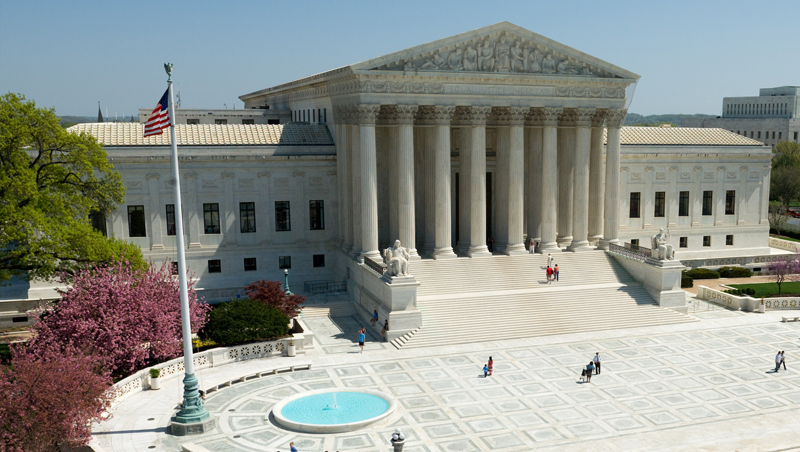

The supreme court, of the corporate United states, hands down Penn Central Railroad v. New York City: A state does not have to pay “just compensation” to the owners when it designates a property as a historical landmark. Via the fraudulent 14th amendment, this rescinds an ancient principal in law: Cujus est solum, ejus est usque ad infoeros (Latin for “Whoever owns the land, owns to the heavens and the depths”). Denying the right of a corporation to build a skyscraper, thus denying it 150,000,000 “dollars” in guaranteed revenue does not constitute a taking without compensation.
[added 11/21/2022]
The supreme court, of the corporate United states, hands down Duke Power v. Carolina Environmental Study Group: Via the fraudulent 14th amendment, the Price-Anderson Nuclear Industries Indemnity Act, which shields the nuclear power industry from liability is lawful.
[restored 8/2/2025]
The supreme court, of the corporate United states, hands down Houchins v. KQED: Members of the media have no Freedom of the Press right to interview prisoners.
[added 8/2/2025]
Subsequent Events:
Authority:
“Law of the Jungle”
ccc-2point0.com/preface
References:
Penn Central Transportation v. New York, 438 U.S. 104 (1978).
Gerald Gunther, Constitutional Law, twelfth edition, (Westbury, New York: Foundation Press, 1991), 472-73, 1480-82, 1619-20.
Robert A. Levy and William Mellor, The Dirty Dozen: How twelve Supreme Court cases radically expanded government and eroded freedom, (New York: Sentinel, 2008), xvii, 170-80.
Duke Power v. Carolina Environmental Study Group – Wikipedia
en.wikipedia.org/wiki/Duke_Power_Co._v._Carolina_Environmental_Study_Group
Penn Central Transportation Co. v. New York City – Wikipedia
en.wikipedia.org/wiki/Penn_Central_Transportation_Co._v._New_York_City
Houchins v. KQED – Wikipedia
en.wikipedia.org/wiki/Houchins_v._KQED